
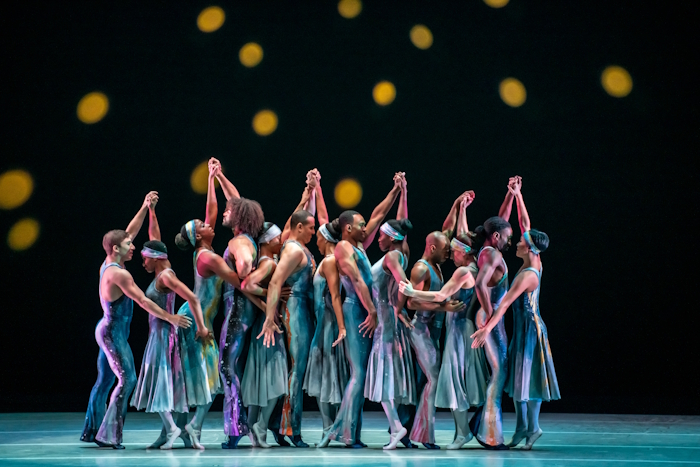
Sadler’s Wells, London
September 16, 2026
It is a little startling to realise that it is just shy of seventy years since Alvin Ailey and his company made their début in New York City and that the works shown in their first programme are almost as old. That means that we are about the same distance away from the first performances as Fokine was from the Romantic ballets that inspired Les Sylphides.
Perhaps it is that very distance that lends this Legacy programme a freshness. That and the fact that (hooray!) they were not danced in black against a black stage with hardly any lighting.
In the excerpts from Night Creature, the beings of the title are not the sort of creepy crawlies that scuttle out as soon as the lights go down, but exuberant revellers, fizzing and popping with enthusiasm for evening revelries. Frothy pastel blue costumes, liberally sprinkled with sequins, delight the eye. Flames of pink lick up the men’s trouser legs and the women nod to the roaring ‘20s with matching head bands. Ailey’s ballet background is much in evidence and he makes frequent use of body ripples and unison work for the ensemble.
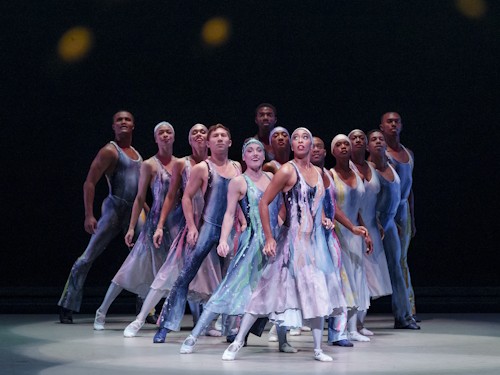
Photo Paul Kolnik
It is to the company’s credit that dancers of very different heights and shapes are perfectly synchronised throughout the programme. All three works, but especially Night Creature also use moments of pedestrian dance, the sudden changes of direction make dancers appear to be schools of well-drilled fish and engender physical cross currents as a counterpoint to syncopated music. Surely a tribute to the streets of Manhattan.
The rough around the edges music recordings are not the best, however, although matters are not helped by the very loud volume. The excerpts from Night Creature make much use of the piano keyboard’s extremities initially and in the reprise. Some of the notes were distorted until they were almost a semitone out, although that did make it oddly charming as they were punctuated by the ping of the high hat and the tsk tsk tsk of the steel brush.
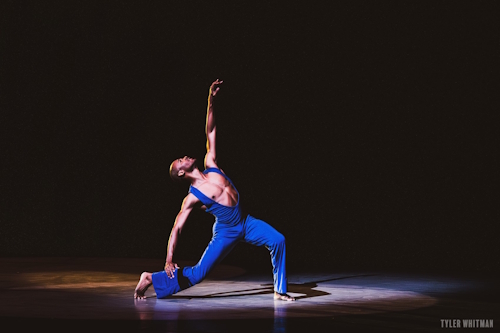
Photo Tyler Whitman
A Song For You draws us to an Edward Hopper-like loneliness of the bustling city. Donny Hathaway, clad in royal blue, flits like an errant bluebird in his soulful solo. Then it was back to the high energy in Cry danced to an accompaniment by The Voices of East Harlem. It began in a rather frenetic manner, dancers in red and white merging, mingling and parting like pieces a chess board. Constance Stamatiou in layers of white lace brings the temperature down and dances a yearning solo, limbs stretched in all directions.
Grace is a new version of a piece originally choreographed in1996. Here, the volume was racked up even more, instruments thumping and singers wailing in that peculiar way that sounds as if, the women in particular, are on the verge of throwing up. Created nearly forty years from Ailey’s beginnings, the choreography style is less classical and less grounded in modern technique.
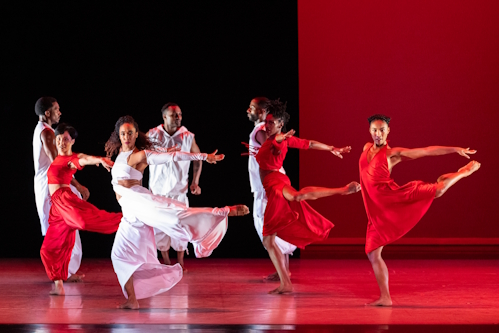
Photo Danica Paulos
The evening closes with a section from Revelations where white clad dancers perform to spirituals. A woman floats through wielding a huge canopied parasol high above her head until it resembles a demented jelly fish. Cloth is wafted like and altar and then like a river as references in the music suggest baptism. The dancers could be refugees from a Jack Vettriano painting or maybe white is the colour of the dead.
It was good to see that Alvin Ailey American Dance Theater is in such excellent form and so connected to its roots. So often, companies do not outlive the demise of their founder and the personality that shaped the quotidian, but the Ailey Company seem to be bucking the trend.